Natural and Acquired Resistance to Cancer Therapies


Figure 47-1 Mechanisms of cellular drug resistance.


It is likely that the rate of development of drug-resistant mutants in a cancer varies depending on the nature of the genetic instability of that cancer, the drug mechanism, and the treatment dose and schedule (selection pressure). 30–32,37,38 In general, the concept of selection for acquired resistance implies that mutations either may preexist as small subpopulations within the cancer or may arise during the course of therapy and eventually manifest themselves as regrowth of tumor. The tumor cell population in newly diagnosed metastatic cancers almost always exceeds 1 billion cells (equivalent to 1 g or cubic centimeter of tumor). Thus, it is very likely that cancers that are intrinsically sensitive to any therapeutic agent will also contain one or more drug-resistant clones. This provides a powerful rationale for both combination drug therapies (to lessen the likelihood of doubly resistant clones) and adjuvant therapies of cancers (to cure patients with micrometastatic disease and lower tumor burdens).

Recent genetic studies have provided new insights into clonal populations and the evolution of resistant variants in clinical cancers. 39–41 These studies used DNA sequencing and sampling of multiple tumor sites of primary and metastatic cancers to directly demonstrate heterogeneity within tumors and changes in the distribution of clonal populations after therapies.

Gene amplification, or increase in gene copy number, was first described for the DHFR gene as a mechanism for acquired resistance to methotrexate. 42 Amplification of genes is now known to be a prominent feature of the genomic instability of cells and to be a key genetic mechanism involved in oncogenesis (MYC, HER2, EGFR), as well as in drug resistance. It is one of the major mechanisms for increasing the expression of drug-resistance genes, including MDR1/ABCB1. 27,43


Epigenetics and Drug Resistance


In addition to selection of resistant mutants, acquired resistance may develop via epigenetic changes, by induction of resistance gene expression. 44 For example, various cellular stresses, including exposure to ionizing radiation and chemotherapies, have been shown to increase expression of the multidrug transporter gene MDR1/ABCB1. 27,45–47 These epigenetic mechanisms such as DNA methylation and histone modifications can contribute to heterogeneity in gene expression and also offer the possibility of reversing drug resistance with drugs such as vorinostat and decitabine that target the epigenome. 48–55 MicroRNAs are a target for epigenetic regulation that can alter drug resistance. Thus, downregulation of the miR-200 family results in epithelial-to-mesenchymal transition (EMT) and upregulation of tubulin beta-3 (TUBB3), which can confer resistance to taxane drugs. 56

Cancer stem cells (CSCs) represent a subset of cells within a cancer that have the capacity for sustained proliferation and that are thought to be primarily responsible for the growth of cancer. CSCs typically have an EMT phenotype and upregulation of many survival mechanisms, including drug transporters and resistance to apoptosis. 57–60


Tumor Stroma, Cell-to-Cell Interactions, and Drug Resistance


The tumor microenvironment and, in particular, interactions of stromal cells with cancer cells have been shown to enhance drug resistance. 61–64 The underlying mechanism for this effect is protection from cell death or apoptosis, mediated by both cellular and noncellular components of the tumor microenvironment. These stromal components include cellular adhesion molecules in the extracellular matrix, chemokines such as CSCL12, and integrins. Cross talk between cancer-associated fibroblasts and malignant cells in tumors promotes tumor progression and cell survival in part via cell adhesion to fibronectin. 64


Drug Efflux Transporters


There are approximately 50 ABC transporters (ATP-binding cassette membrane proteins) in the human genome. 65–67 Defective forms of several of these transporters are causes of human genetic diseases, such as cystic fibrosis and Dubin-Johnson syndrome. 65 Several members of the ABC transporter family have the capacity to efflux small molecules, including anticancer drugs, and thus contribute to drug resistance. The major drug-resistance ABC transporter genes include MDR1/ABCB1, several members of the MRP/ABCC subgroup, and ABCG2. 65,67,68

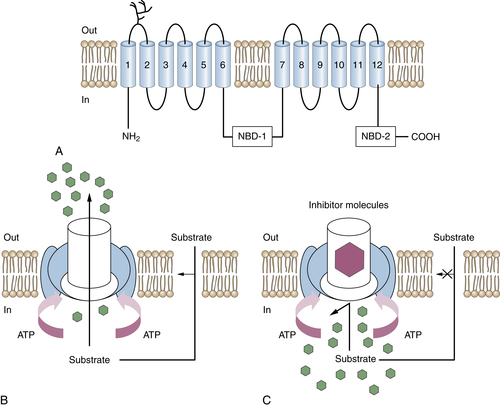
P-glycoprotein (P-gp), the product of the MDR1/ABCB1 gene, is the most prevalent ABC drug-resistance transporter and has been extensively studied. 69–73 The protein has a molecular mass of 180 kDa, with 12 transmembrane segments and two intracytoplasmic ATP binding domains (Figure 47-2 ). High-resolution electron microscopy has revealed that the transmembrane segments form a pore, and drug binding sites have been identified within this pore. Access of drugs to the transporter is thought to occur both via the cytoplasm and by diffusion within the membrane. P-gp is a transporter with very broad substrate specificity, including approximately a third of all anticancer drugs, as well as many other drugs used in other areas of medicine. Active efflux of drugs is mediated by conversion of ATP to ADP. Theories regarding the molecular mechanism of drug extrusion include an ATPase-mediated conformational change in the protein producing a “flippase” action, which exposes substrate drugs to the extracellular environment, and a “membrane vacuum cleaner” function in which drugs access the transporter via the bilipid plasma membrane. 70 The direct role of P-gp in conferring multidrug resistance has been confirmed by transfection of the gene in cellular models. 72

P-gp is expressed in many normal tissues, where it serves as a barrier to drug absorption (small bowel and colon), a barrier to tissue entry (endothelial cells of the CNS, testis, and placenta), and to facilitate drug excretion (biliary tract of the liver and proximal tubule of the kidney. 4,73 It is also highly expressed in cancers derived from these tissues (colorectal, renal) and is one of the constitutive mechanisms of drug resistance in these cancers.

P-gp expression in cancers results in a classical multidrug-resistance phenotype, with high degrees of resistance to the drugs that are transport substrates for the protein. These drug substrates include the anthracyclines (doxorubicin, daunorubicin, idarubicin, and epirubicin), vinca alkaloids (vincristine, vinblastine, vindesine, vinorelbine), taxanes (paclitaxel, docetaxel), epipodophyllotoxins (etoposide, teniposide), mitoxantrone, and dactinomycin. 70 Many newer, targeted drugs such as imatinib are also transport substrates for P-gp. 74


image

Figure 47-2 Structure and mechanism of action of P-glycoprotein (P-gp). (A) Diagram of P-gp showing the 12 transmembrane segments, two nucleotide binding domains (NBDs), and extracellular glycosylation. (B) P-gp forms a central pore and requires ATPase activity to pump drugs out of the cell. (C) Inhibitors of P-gp function prevent drug efflux, resulting in increased intracellular drug accumulation and enhanced killing of multidrug-resistant cells.

The clinical significance of P-gp in drug resistance is supported by evidence that its expression confers an adverse prognosis in many tumor types, including acute myeloid leukemias (AMLs), acute lymphoid leukemias, lymphomas, myeloma, breast and ovarian cancers, and sarcomas. 9,75–81 In AML, P-gp is expressed in more than 70% of specimens from patients older than age 60, versus 30% to 40% of patients up to age 60, and its expression correlates with reduced rates of complete remission and shorter survival. 80 In breast cancers, P-gp expression occurs in 40% to 50% of specimens and is associated with decreased rates of remission to P-gp substrate drugs (taxanes and anthracyclines). 81 Selection of multidrug-resistant (MDR) subclones within cancer populations is suggested by evidence that P-gp expression is more frequent in leukemias and breast cancers after patients have relapsed from prior therapy with MDR-related chemotherapy drugs. 80,81

The prevalence and adverse prognostic effects of P-gp in many cancers have led to attempts to reverse MDR by combining chemotherapy with inhibitors of P-gp. 80,82–84 These clinical trials to reverse or modulate MDR have used a variety of competitive and noncompetitive inhibitors of P-gp, including verapamil, cyclosporine, quinine, the cyclosporine analog valspodar, and others. In general, these attempts have not resulted in proven clinical benefit. The reasons for these failures are multiple and include the following: inadequate concentrations of MDR-reversing agents because of toxicities to normal tissues, lack of specificity of P-gp inhibition leading to drug interactions and off-target effects, use of an unselected patient population including patients who did not express P-gp, and coexpression of other mechanisms of drug resistance. 80,82–84 A particularly problematic issue is the co-inhibition by cyclosporins and other MDR inhibitors of other ABC transporters as well as the mixed-function oxidase CYP 3A4, resulting in the need to reduce doses of chemotherapeutic drugs while attempting to sensitize P-gp–expressing cancer cells. 84–87 Despite these issues, cyclosporine has been shown to moderately increase complete remission rates and to significantly prolong survival in a randomized clinical trial in AML. 80,88 A more potent and specific inhibitor of P-gp, zosuquidar, has not prolonged survival in AML, although the schedule of administration of the drug in this trial was suboptimal. 89

Several members of the MRP or ABCC gene family also function as drug transporters. 68,90–97 The MDR-associated protein (the MRP1/ABCC1 gene) confers resistance to anthracyclines, vinca alkaloids, and epipodophyllotoxins and preferentially transports glutathione conjugates of substrate drugs. 90,91,94–97 In general, MRP1 is not as strongly associated with clinical drug resistance and prognosis as MDR1, and clinical strategies for reversing resistance related to MRP1 have not been developed. The MRP2/ABCC2 gene encodes the canalicular multiple organic anion transporter, which is expressed at high levels in the biliary tract, and transports glucuronide and glutathione conjugates of drugs, including anthracyclines. It plays a role in hepatic excretion of anticancer drugs, but its role in drug resistance is not clear. 92,95 Its hereditary deficiency results in the Dubin-Johnson syndrome. 68 The transporter encoded by the MRP3/ABCC3 gene confers low-level resistance to epipodophyllotoxins as well as to methotrexate. 68,93 MRP4/ABCC4 and MRP5/ABCC5 confer resistance to anionic purines and other nucleotide analogs and their metabolites. 68,98

ABCG2 (BCRP) is another member of the ABC family, implicated in clinical resistance to the anthracenedione drug mitoxantrone and the camptothecins. 99,100 This transporter is 72 kDa in size, less than half the size of the ABCB and ABCC subgroups, and is thought to require dimerization for its function. It is variably expressed in AML and is a negative prognostic factor in that disease. 101–103 Together with P-gp, ABCG2 is constitutively expressed in both normal hematopoietic and leukemic stem cells 104,105 and is a marker of cancer stem cells. 60

Polymorphisms in the DNA sequence of ABCB1 and other ABC transporters are being studied for their relationship to drug disposition, efficacy, and toxicities. 66 Single-nucleotide polymorphisms of the ABCB1 gene (C1236T, G2677T, and C3435T), which have been associated with altered drug absorption or disposition in some studies, were not found to effect complete remission and survival in patients with AML. 106 The function and clinical significance of the ABC transporter family in anticancer drug resistance continue to be investigated.

Two membrane proteins involved in the efflux of copper, ATP7A and ATP7B, have been shown to also transport the platinum drugs and contribute to resistance to cisplatin, carboplatin, and oxaliplatin. 107,108


Impaired Drug Uptake


Cellular entry of most anticancer agents is via passive diffusion. However, some drugs are also transported into cells by membrane proteins, and the expression and activity of these proteins are determinants of cellular sensitivity or resistance. Methotrexate enters cells by means of the reduced folate carrier, and decreased expression of this protein results in relative resistance to the drug. 109 Reduced drug uptake has also been observed in some cells resistant to platinum drugs. 110 The major copper influx transporter, CTR1, been implicated in the regulation of intracellular accumulation of cisplatin, carboplatin, and oxaliplatin. 107


Mutation or Altered Expression of Molecular Targets

As previously mentioned, the first description of gene amplification as a genetic phenomenon and as a mechanism for acquired drug resistance was the discovery of amplified dihydrofolate reductase (DHFR) genes in a cell line selected by exposure to increasing concentrations of methotrexate. 42 Multiple copies of DHFR were identified in extrachromosomal fragments of DNA, termed double minute chromosomes (DMs), in the methotrexate-resistant cells. Resistance in these cells was unstable because DMs were not normally replicated in the absence of drug selection. 111 Subsequently, other methotrexate-resistant cells were found to have multiple gene copies of DHFR integrated into the genome, in areas of “homogeneously staining regions,” or HSRs. HSRs are more stable because they are integrated into the genome and included in the normal process of DNA replication.

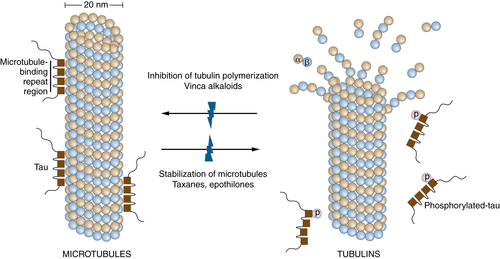
Several important classes of anticancer drugs (vincas, taxanes, epothilones) act by binding to β tubulins and altering the dynamic instability of microtubules (Figure 47-3 ). 112 Alterations in β tubulins, including mutations and changes in the proportion of β-tubulin isoforms, particularly the class III isoform, have been implicated in resistance to taxanes. 112–115 Vinca alkaloids inhibit tubulin polymerization and thus have opposing effects to those of taxanes and epothilones, which stabilize polymerized microtubules. These opposing mechanisms of action may be reflected in reciprocal effects of changes in tubulin content or isotype expression on vinca and taxane sensitivities, with resistance to one class of drugs accompanied by increased sensitivity to the other. 112 Although mutations in β-tubulin that alter taxane binding have been found to confer resistance in cellular models, such mutations have not been found in various human cancer clinical specimens. 116,117

The microtubule binding protein, MAP-Tau, binds to a site on β-tubulin overlapping with taxanes and affects microtubule dynamic instability. Its expression has been associated with resistance to the taxane drug paclitaxel in breast cancer specimens. 118,119 Other mechanisms of resistance to antitubulin drugs include the P-gp transporter (for taxanes and vincas), 81 the cell spindle checkpoint control pathway, 120 and regulation of programmed cell death or apoptosis. 112,121

The epothilones are a new class of antitubulin cytotoxic drugs whose binding site on tubulins overlaps with the taxanes. 122 In contrast to taxanes, epothilones are not transport substrates for P-gp and therefore have potential antitumor efficacy in cancers that are multidrug resistant because of P-gp expression. 122,123 However, they are likely to share some of the target-related mechanisms of resistance to taxanes, such as factors that affect microtubule dynamicity and regulation of apoptosis.

Topoisomerase I and II are drug targets for camptothecin and epipodophyllotoxin drugs, respectively, and mutations or altered expression of these enzymes have been shown to cause cellular resistance to these drugs. 33,124–129 Because drug-induced DNA breakage is proportional to the amount of topoisomerase II enzyme, decreased enzyme content is associated with resistance, and higher enzyme content with drug sensitivity. 33,125,128

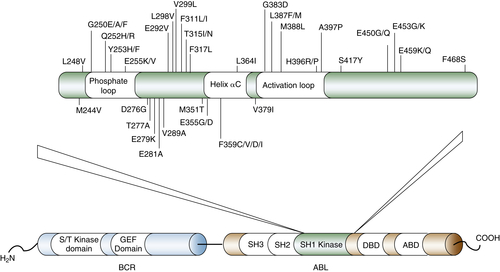
Alteration of drug targets is an important mechanism of resistance for new, targeted drugs, such as the tyrosine kinase inhibitors (Figure 47-4 ). 74,130 For the drug imatinib, an inhibitor of the fusion oncoprotein gene BCR/ABL, point mutations in the kinase domain of its target are a major mechanism of acquired resistance in chronic myeloid leukemias (CMLs). 131 More than 30 such mutations that confer resistance to imatinib have been identified. Because resistance to imatinib occurs at a rate of around 3% of patients per year of drug therapy, such mutations occur relatively infrequently. The drug dasatinib, a potent inhibitor of the BCR/ABL kinase, has been shown to inhibit almost all of these mutant kinases and to produce remissions in imatinib-resistant CML. 131 One BCR/ABL mutant, T351I, remains resistant to both imatinib and dasatinib, although other new drugs are being developed for this double-resistant mutation. BCR/ABL gene amplification can also result in resistance to the kinase inhibitors in CML. 132


image

Figure 47-3 Mechanism of action of tubulin polymerizing and microtubule-stabilizing drugs.


Intracellular Redistribution of Drug


Intracellular drug sequestration of anthracyclines has been observed in cellular models with high expression of the major vault protein (MVP), also known as LRP. 133 Vaults are barrel-like cytoplasmic organelles with a molecular mass of 13 MDa, which are thought to function in intracellular transport. In addition to high expression of MVP in some cellular models of drug resistance, this protein is variably expressed in acute myeloid leukemias and may be a factor in clinical drug resistance in that disease. 134


Detoxification of Drug or Intermediate Drug Product

Metabolic inactivation of drugs is a mechanism of resistance to many agents. Thus, cytidine deaminase activity can result in resistance to cytarabine. 135 Dihydropyrimidine dehydrogenase catabolism of 5-fluorouracil is a determinant of activity of that agent. 136

The DNA-binding glycopeptide drug bleomycin is inactivated by an aminopeptidase termed bleomycin hydrolase. 137 Most cancers are resistant to bleomycin and have high levels of this enzyme, whereas sensitive tumors (germ cell cancers, lymphomas, squamous carcinomas) have low levels. Similarly, most normal tissues have high levels of bleomycin hydrolase, but the two major sites of toxicity, lung and skin, express low levels. 137

For electrophilic DNA alkylating agents and platinum drugs, detoxification via nucleophilic sulfur-containing compounds is an important class of resistance pathways. 108 Glutathione reductases are an important class of detoxifying enzymes that can generate resistance to such drugs by conjugation with glutathione. 138–148 Moreover, as previously noted, some members of the MRP family of transporters can efflux glutathione conjugates of cytotoxic drugs, so that metabolic detoxification is coupled to outward transport of toxins. 68,95,97


image

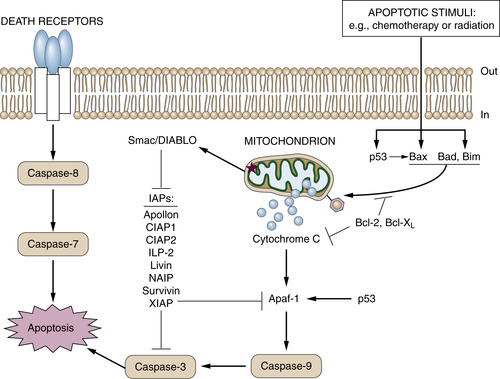
Figure 47-4 Cellular pathways of programmed cell death, or apoptosis.


Enhanced DNA Repair


DNA repair pathways are important determinants of response to alkylating agents and platinum drugs. 108,149–152 Nucleotide excision repair (NER) is a complex, highly regulated process involving more than 30 proteins. Moreover, two general pathways are involved: global genomic NER, which repairs damage in transcriptionally silent areas, and transcription-coupled NER, which repairs damage to the actively transcribed DNA strand. The steps in NER include recognition of the damaged DNA, DNA unwinding, incision, degradation, polymerization, and ligation. 151 Evidence for the role of many DNA repair genes in response to both DNA-damaging drug and ionizing radiation derives in part from studies of genetic defects such as ataxia telangiectasia, xeroderma pigmentosum, and Bloom syndrome, in which hypersensitivity to DNA-damaging agents has been observed.

Among the many genes involved in NER, recent attention has focused on ERCC1. High expression of the DNA excision repair gene ERCC1, which is involved in repair of DNA adducts from alkylating agents and platinum drugs, has been shown to correlate with adverse outcomes in patients with advanced-stage non–small-cell lung cancers treated with cisplatin-based chemotherapy. 153 In earlier stages of lung cancer, patients whose tumors did not express ERCC1 benefited significantly from cisplatin adjuvant chemotherapy, whereas patients whose tumors expressed ERCC1 did not benefit from the chemotherapy. 154 Paradoxically, high expression of ERCC1 was found to be a favorable prognostic factor for survival in patients with early stages of lung cancer, in the absence of adjuvant chemotherapy. 154–156

O6-Methylguanyl-methyl-transferase (MGMT) is particularly important in resistance to the nitrosourea carmustine and the DNA-methylating agent temozolomide. 149,151 MGMT has been identified as a key factor in clinical outcomes in brain tumors, and drugs to deplete MGMT are being developed as potential therapeutic approaches to modulate drug resistance. 149


Decreased Drug Activation


Most antimetabolite drugs generally require metabolic activation to generate their active nucleoside or nucleotide moiety, via kinases and phosphoribosyl transferases. 157 Thus, for cytarabine, generation of ara-dCTP levels intracellularly is an important determinant of antitumor efficacy. 157 In the case of 5-fluorouracil, activation of the drug requires formation of 5-fluorodeoxyuridine monophosphate (FdUMP). 157 In addition, optimal inhibition of thymidylate synthase by 5-fluorouracil depends in part on intracellular levels of the cofactor 5,10-methylene tetrahydrofolate. 158

The oxazaphosphorine mustards (cyclophosphamide and ifosfamide) are prodrugs that are activated predominantly in liver tissue by mixed function oxidases (CYP enzymes). 150 Although the major mechanisms of resistance to these drugs are thought to be inactivation of alkylating metabolites by thiol compounds, as well as DNA repair mechanisms, variable levels of mixed function oxidase activity within cancers may also be a determinant of their activity.


Altered Pathways for Programmed Cell Death (Apoptosis)


Pathways for the regulation of programmed cell death or apoptosis are important both in oncogenesis and as determinants of response to cancer therapies (Figure 47-5 ). 12–25 BCL2 is oncogenic in many B-cell lymphomas, where its expression is upregulated by chromosomal translocations and other mechanisms. It also functions to protect cells from apoptosis after radiation, glucocorticoids, and chemotherapies. 13,14,25 The BCLX gene has long and short forms, encoding the proteins bcl-xL and bcl-xS, which serve to inhibit and promote apoptosis, respectively. 24 Both the BCL-2 and the inhibitor of apoptosis (IAP or BIRC) families of regulators of cell death are currently being explored as targets to sensitize drug-resistant cancer cells to chemotherapies. 159,160

The relationship between oncogenesis and drug sensitivity or resistance is also exemplified by the p53 pathway, which is mutated in the majority of human cancers. Normal p53 function is essential for the efficient functioning of the mitochondrially mediated apoptotic pathway, particularly in response to DNA-damaging agents, including ionizing radiation and many chemotherapeutic drugs, such as alkylating agents, platinums, anthracyclines, and topoisomerase inhibitors. 12,15,22,23


Individualization of Therapy Based on Predictive Multigenic Markers

Knowledge about mechanisms of drug resistance, molecular targets of drugs, and signaling pathways related to treatments is enabling more precise predictive molecular testing of drug efficacy. 10 Historically, such approaches were pioneered in the treatment of breast cancer by the use of hormone receptor measurements to guide hormonal therapy and testing for overexpression or amplification of the HER2 gene to identify breast cancer patients for trastuzumab therapy. The ability to determine genome-wide expression by microarray analysis has resulted in the identification of candidate gene profiles that are associated with remissions to drugs or drug combinations. 161,162 Such approaches may lead to increasing individualization of therapy with the use of genomic or proteomic panels of predictive markers, but prospective validation of such markers in clinical trials has been difficult.


image

Figure 47-5 Structure of the fusion oncoprotein BCR/ABL, depicting the point mutations that result in resistance to imatinib in chronic myeloid leukemias.


References


1. Carlson R.W. , Sikic B.I. Continuous infusion or bolus injection in cancer chemotherapy . Ann Intern Med . 1983 ; 99 : 823 – 833 .


2. Cassidy J. Chemotherapy administration: doses, infusions and choice of schedule . Ann Oncol . 1994 ; 5 ( suppl 4 ) : 25 – 29 discussion 29–30 .


3. Marangolo M. , Bengala C. , Conte P.F. et al. Dose and outcome: the hurdle of neutropenia (Review) . Oncol Rep . 2006 ; 16 : 233 – 248 .


4. Cordon-Cardo C. , O’Brien J.P. , Casals D. et al. Multidrug-resistance gene (P-glycoprotein) is expressed by endothelial cells at blood-brain barrier sites . Proc Natl Acad Sci U S A . 1989 ; 86 : 695 – 698 .


5. Schinkel A.H. , Smit J.J. , van Tellingen O. et al. Disruption of the mouse mdr1a P-glycoprotein gene leads to a deficiency in the blood-brain barrier and to increased sensitivity to drugs . Cell . 1994 ; 77 : 491 – 502 .


6. Kyle A.H. , Huxham L.A. , Yeoman D.M. et al. Limited tissue penetration of taxanes: a mechanism for resistance in solid tumors . Clin Cancer Res . 2007 ; 13 : 2804 – 2810 .


7. Minchinton A.I. , Tannock I.F. Drug penetration in solid tumours . Nat Rev Cancer . 2006 ; 6 : 583 – 592 .


8. Matsumoto S. , Batra S. , Saito K. et al. Antiangiogenic agent sunitinib transiently increases tumor oxygenation and suppresses cycling hypoxia . Cancer Res . 2011 ; 71 : 6350 – 6359 .


9. Gottesman M.M. Mechanisms of cancer drug resistance . Annu Rev Med . 2002 ; 53 : 615 – 627 .


10. Quintieri L. , Fantin M. , Vizler C. Identification of molecular determinants of tumor sensitivity and resistance to anticancer drugs . Adv Exp Med Biol . 2007 ; 593 : 95 – 104 .


11. Dean M. , Fojo T. , Bates S. Tumour stem cells and drug resistance . Nat Rev Cancer . 2005 ; 5 : 275 – 284 .


12. Clarke A.R. , Purdie C.A. , Harrison D.J. et al. Thymocyte apoptosis induced by p53-dependent and independent pathways . Nature . 1993 ; 362 : 849 – 852 .


13. Fisher T.C. , Milner A.E. , Gregory C.D. et al. bcl-2 modulation of apoptosis induced by anticancer drugs: resistance to thymidylate stress is independent of classical resistance pathways . Cancer Res . 1993 ; 53 : 3321 – 3326 .


14. Miyashita T. , Reed J.C. bcl-2 gene transfer increases relative resistance of S49.1 and WEHI7.2 lymphoid cells to cell death and DNA fragmentation induced by glucocorticoids and multiple chemotherapeutic drugs . Cancer Res . 1992 ; 52 : 5407 – 5411 .


15. Fan S. , el-Deiry W.S. , Bae I. et al. p53 gene mutations are associated with decreased sensitivity of human lymphoma cells to DNA damaging agents . Cancer Res . 1994 ; 54 : 5824 – 5830 .


16. Reed J.C. Bcl-2 family proteins: regulators of apoptosis and chemoresistance in hematologic malignancies . Semin Hematol . 1997 ; 34 : 9 – 19 .


17. Strasser A. , Huang D.C. , Vaux D.L. The role of the bcl-2/ced-9 gene family in cancer and general implications of defects in cell death control for tumourigenesis and resistance to chemotherapy . Biochim Biophys Acta . 1997 ; 1333 : F151 – F178 .


18. Schmitt C.A. , Lowe S.W. Apoptosis and therapy . J Pathol . 1999 ; 187 : 127 – 137 .


19. Inoue S. , Salah-Eldin A.E. , Omoteyama K. Apoptosis and anticancer drug resistance . Hum Cell . 2001 ; 14 : 211 – 221 .


20. Johnstone R.W. , Ruefli A.A. , Lowe S.W. Apoptosis: a link between cancer genetics and chemotherapy . Cell . 2002 ; 108 : 153 – 164 .


21. Fulda S. , Debatin K.M. Extrinsic versus intrinsic apoptosis pathways in anticancer chemotherapy . Oncogene . 2006 ; 25 : 4798 – 4811 .


22. Lowe S.W. , Schmitt E.M. , Smith S.W. et al. p53 is required for radiation-induced apoptosis in mouse thymocytes . Nature . 1993 ; 362 : 847 – 849 .


23. Lowe S.W. , Ruley H.E. , Jacks T. et al. p53-dependent apoptosis modulates the cytotoxicity of anticancer agents . Cell . 1993 ; 74 : 957 – 967 .


24. Boise L.H. , Gonzalez-Garcia M. , Postema C.E. et al. bcl-x, a bcl-2-related gene that functions as a dominant regulator of apoptotic cell death . Cell . 1993 ; 74 : 597 – 608 .


25. Miyashita T. , Reed J.C. Bcl-2 oncoprotein blocks chemotherapy-induced apoptosis in a human leukemia cell line . Blood . 1993 ; 81 : 151 – 157 .


26. Morin P.J. Drug resistance and the microenvironment: nature and nurture . Drug Resist Updat . 2003 ; 6 : 169 – 172 .


27. Fojo T. Multiple paths to a drug resistance phenotype: mutations, translocations, deletions and amplification of coding genes or promoter regions, epigenetic changes and microRNAs . Drug Resist Updat . 2007 ; 10 : 59 – 67 .


28. Nowell P.C. The clonal evolution of tumor cell populations . Science . 1976 ; 194 : 23 – 28 .


29. Greaves M. , Maley C.C. Clonal evolution in cancer . Nature . 2012 ; 481 : 306 – 313 .


30. Goldie J.H. , Coldman A.J. A mathematic model for relating the drug sensitivity of tumors to their spontaneous mutation rate . Cancer Treat Rep . 1979 ; 63 : 1727 – 1733 .


31. Goldie J.H. , Coldman A.J. Genetic instability in the development of drug resistance . Semin Oncol . 1985 ; 12 : 2222 – 2230 .


32. Woodhouse J.R. , Ferry D.R. The genetic basis of resistance to cancer chemotherapy . Ann Med . 1995 ; 27 : 157 – 167 .


33. Jaffrezou J.P. , Chen G. , Duran G.E. et al. Mutation rates and mechanisms of resistance to etoposide determined from fluctuation analysis . J Natl Cancer Inst . 1994 ; 86 : 1152 – 1158 .


34. Chen G. , Jaffrezou J.P. , Fleming W.H. et al. Prevalence of multidrug resistance related to activation of the mdr1 gene in human sarcoma mutants derived by single-step doxorubicin selection . Cancer Res . 1994 ; 54 : 4980 – 4987 .


35. Beketic-Oreskovic L. , Duran G.E. , Chen G. et al. Decreased mutation rate for cellular resistance to doxorubicin and suppression of mdr1 gene activation by the cyclosporin PSC 833 . J Natl Cancer Inst . 1995 ; 87 : 1593 – 1602 .


36. Dumontet C. , Duran G.E. , Steger K.A. et al. Resistance mechanisms in human sarcoma mutants derived by single-step exposure to paclitaxel (Taxol) . Cancer Res . 1996 ; 56 : 1091 – 1097 .


37. Matsumoto Y. , Takano H. , Fojo T. Cellular adaptation to drug exposure: evolution of the drug-resistant phenotype . Cancer Res . 1997 ; 57 : 5086 – 5092 .


38. Chen K.G. , Wang Y.C. , Schaner M.E. et al. Genetic and epigenetic modeling of the origins of multidrug-resistant cells in a human sarcoma cell line . Cancer Res . 2005 ; 65 : 9388 – 9397 .


39. Gerlinger M. , Rowan A.J. , Horswell S. et al. Intratumor heterogeneity and branched evolution revealed by multiregion sequencing . N Engl J Med . 2012 ; 366 : 883 – 892 .


40. Lee A.J. , Swanton C. Tumour heterogeneity and drug resistance: personalising cancer medicine through functional genomics . Biochem Pharmacol . 2012 ; 83 : 1013 – 1020 .


41. Swanton C. Intratumor heterogeneity: evolution through space and time . Cancer Res . 2012 ; 72 : 4875 – 4882 .


42. Alt F.W. , Kellems R.E. , Bertino J.R. et al. Selective multiplication of dihydrofolate reductase genes in methotrexate-resistant variants of cultured murine cells . J Biol Chem . 1978 ; 253 : 1357 – 1370 .


43. Wang Y.C. , Juric D. , Francisco B. et al. Regional activation of chromosomal arm 7q with and without gene amplification in taxane-selected human ovarian cancer cell lines . Genes Chromosomes Cancer . 2006 ; 45 : 365 – 374 .


44. Matei D. , Fang F. , Shen C. et al. Epigenetic resensitization to platinum in ovarian cancer . Cancer Res . 2012 ; 72 : 2197 – 2205 .


45. Hill B.T. , Deuchars K. , Hosking L.K. et al. Overexpression of P-glycoprotein in mammalian tumor cell lines after fractionated X irradiation in vitro . J Natl Cancer Inst . 1990 ; 82 : 607 – 612 .


46. Brugger D. , Brischwein K. , Liu C. et al. Induction of drug resistance and protein kinase C genes in A2780 ovarian cancer cells after incubation with antineoplastic agents at sublethal concentrations . Anticancer Res . 2002 ; 22 : 4229 – 4232 .


47. Abolhoda A. , Wilson A.E. , Ross H. et al. Rapid activation of MDR1 gene expression in human metastatic sarcoma after in vivo exposure to doxorubicin . Clin Cancer Res . 1999 ; 5 : 3352 – 3356 .


48. Wilting R.H. , Dannenberg J.H. Epigenetic mechanisms in tumorigenesis, tumor cell heterogeneity and drug resistance . Drug Resist Updat . 2012 ; 15 : 21 – 38 .


49. Balch C. , Nephew K.P. Epigenetic targeting therapies to overcome chemotherapy resistance . Adv Exp Med Biol . 2013 ; 754 : 285 – 311 .


50. Zeller C. , Dai W. , Steele N.L. et al. Candidate DNA methylation drivers of acquired cisplatin resistance in ovarian cancer identified by methylome and expression profiling . Oncogene . 2012 ; 31 : 4567 – 4576 .


51. Shen D.W. , Pouliot L.M. , Hall M.D. et al. Cisplatin resistance: a cellular self-defense mechanism resulting from multiple epigenetic and genetic changes . Pharmacol Rev . 2012 ; 64 : 706 – 721 .


52. Bhatla T. , Wang J. , Morrison D.J. et al. Epigenetic reprogramming reverses the relapse-specific gene expression signature and restores chemosensitivity in childhood B-lymphoblastic leukemia . Blood . 2012 ; 119 : 5201 – 5210 .


53. Chen K.G. , Sikic B.I. Molecular pathways: regulation and therapeutic implications of multidrug resistance . Clin Cancer Res . 2012 ; 18 : 1863 – 1869 .


54. Rosenzweig S.A. Acquired resistance to drugs targeting receptor tyrosine kinases . Biochem Pharmacol . 2012 ; 83 : 1041 – 1048 .


55. Sharma S.V. , Lee D.Y. , Li B. et al. A chromatin-mediated reversible drug-tolerant state in cancer cell subpopulations . Cell . 2010 ; 141 : 69 – 80 .


56. Mongroo P.S. , Rustgi A.K. The role of the miR-200 family in epithelial-mesenchymal transition . Cancer Biol Ther . 2010 ; 10 : 219 – 222 .


57. Basile K.J. , Aplin A.E. Resistance to chemotherapy: short-term drug tolerance and stem cell-like subpopulations . Adv Pharmacol . 2012 ; 65 : 315 – 334 .


58. Ricci F. , Bernasconi S. , Perego P. et al. Ovarian carcinoma tumor-initiating cells have a mesenchymal phenotype . Cell Cycle . 2012 ; 11 : 1966 – 1976 .


59. Smalley M. , Piggott L. , Clarkson R. Breast cancer stem cells: Obstacles to therapy . Cancer Lett . 2012 Apr 30 [Epub ahead of print] .


60. Maugeri-Sacca M. , Vigneri P. , De Maria R. Cancer stem cells and chemosensitivity . Clin Cancer Res . 2011 ; 17 : 4942 – 4947 .


61. Sebens S. , Schafer H. The tumor stroma as mediator of drug resistance—a potential target to improve cancer therapy? Curr Pharm Biotechnol . 2012 ; 13 : 2259 – 2272 .


62. Sun Y. , Nelson P.S. Molecular pathways: involving microenvironment damage responses in cancer therapy resistance . Clin Cancer Res . 2012 ; 18 : 4019 – 4025 .


63. Westhoff M.A. , Fulda S. Adhesion-mediated apoptosis resistance in cancer . Drug Resist Updat . 2009 ; 12 : 127 – 136 .


64. Flach E.H. , Rebecca V.W. , Herlyn M. et al. Fibroblasts contribute to melanoma tumor growth and drug resistance . Mol Pharm . 2011 ; 8 : 2039 – 2049 .


65. Gottesman M.M. , Ambudkar S.V. Overview: ABC transporters and human disease . J Bioenerg Biomembr . 2001 ; 33 : 453 – 458 .


66. Huang Y. Pharmacogenetics/genomics of membrane transporters in cancer chemotherapy . Cancer Metastasis Rev . 2007 ; 26 : 183 – 201 .


67. Glavinas H. , Krajcsi P. , Cserepes J. et al. The role of ABC transporters in drug resistance, metabolism and toxicity . Curr Drug Deliv . 2004 ; 1 : 27 – 42 .


68. Kruh G.D. , Zeng H. , Rea P.A. et al. MRP subfamily transporters and resistance to anticancer agents . J Bioenerg Biomembr . 2001 ; 33 : 493 – 501 .


69. Riordan J.R. , Ling V. Genetic and biochemical characterization of multidrug resistance . Pharmacol Ther . 1985 ; 28 : 51 – 75 .


70. Ambudkar S.V. , Kimchi-Sarfaty C. , Sauna Z.E. et al. P-glycoprotein: from genomics to mechanism . Oncogene . 2003 ; 22 : 7468 – 7485 .


71. Safa A.R. , Glover C.J. , Meyers M.B. et al. Vinblastine photoaffinity labeling of a high molecular weight surface membrane glycoprotein specific for multidrug-resistant cells . J Biol Chem . 1986 ; 261 : 6137 – 6140 .


72. Ueda K. , Cardarelli C. , Gottesman M.M. et al. Expression of a full-length cDNA for the human “MDR1” gene confers resistance to colchicine, doxorubicin, and vinblastine . Proc Natl Acad Sci U S A . 1987 ; 84 : 3004 – 3008 .


73. Thiebaut F. , Tsuruo T. , Hamada H. et al. Cellular localization of the multidrug-resistance gene product P-glycoprotein in normal human tissues . Proc Natl Acad Sci U S A . 1987 ; 84 : 7735 – 7738 .


74. Shukla S. , Chen Z.S. , Ambudkar S.V. Tyrosine kinase inhibitors as modulators of ABC transporter-mediated drug resistance . Drug Resist Updat . 2012 ; 15 : 70 – 80 .


75. Dalton W.S. , Grogan T.M. , Meltzer P.S. et al. Drug-resistance in multiple myeloma and non-Hodgkin’s lymphoma: detection of P-glycoprotein and potential circumvention by addition of verapamil to chemotherapy . J Clin Oncol . 1989 ; 7 : 415 – 424 .


76. Campos L. , Guyotat D. , Archimbaud E. et al. Clinical significance of multidrug resistance P-glycoprotein expression on acute nonlymphoblastic leukemia cells at diagnosis . Blood . 1992 ; 79 : 473 – 476 .


77. Miller T.P. , Grogan T.M. , Dalton W.S. et al. P-glycoprotein expression in malignant lymphoma and reversal of clinical drug resistance with chemotherapy plus high-dose verapamil . J Clin Oncol . 1991 ; 9 : 17 – 24 .


78. Marie J.P. , Zittoun R. , Sikic B.I. Multidrug resistance (mdr1) gene expression in adult acute leukemias: correlations with treatment outcome and in vitro drug sensitivity . Blood . 1991 ; 78 : 586 – 592 .


79. Bradshaw D.M. , Arceci R.J. Clinical relevance of transmembrane drug efflux as a mechanism of multidrug resistance . J Clin Oncol . 1998 ; 16 : 3674 – 3690 .


80. Mahadevan D. , List A.F. Targeting the multidrug resistance-1 transporter in AML: molecular regulation and therapeutic strategies . Blood . 2004 ; 104 : 1940 – 1951 .


81. Clarke R. , Leonessa F. , Trock B. Multidrug resistance/P-glycoprotein and breast cancer: review and meta-analysis . Semin Oncol . 2005 ; 32 : S9 – S15 .


82. Sikic B.I. Modulation of multidrug resistance: at the threshold . J Clin Oncol . 1993 ; 11 : 1629 – 1635 .


83. Fisher G.A. , Sikic B.I. Clinical studies with modulators of multidrug resistance . Hematol Oncol Clin North Am . 1995 ; 9 : 363 – 382 .


84. Sikic B.I. Pharmacologic approaches to reversing multidrug resistance . Semin Hematol . 1997 ; 34 : 40 – 47 .


85. Lum B.L. , Kaubisch S. , Yahanda A.M. et al. Alteration of etoposide pharmacokinetics and pharmacodynamics by cyclosporine in a phase I trial to modulate multidrug resistance . J Clin Oncol . 1992 ; 10 : 1635 – 1642 .


86. Lum B.L. , Kaubisch S. , Fisher G.A. et al. Effect of high-dose cyclosporine on etoposide pharmacodynamics in a trial to reverse P-glycoprotein (MDR1 gene) mediated drug resistance . Cancer Chemother Pharmacol . 2000 ; 45 : 305 – 311 .


87. Advani R. , Fisher G.A. , Lum B.L. et al. A phase I trial of doxorubicin, paclitaxel, and valspodar (PSC 833), a modulator of multidrug resistance . Clin Cancer Res . 2001 ; 7 : 1221 – 1229 .


88. List A.F. , Kopecky K.J. , Willman C.L. et al. Benefit of cyclosporine modulation of drug resistance in patients with poor-risk acute myeloid leukemia: a Southwest Oncology. Group study . Blood . 2001 ; 98 : 3212 – 3220 .


89. Dantzig A.H. , Law K.L. , Cao J. et al. Reversal of multidrug resistance by the P-glycoprotein modulator, LY335979, from the bench to the clinic . Curr Med Chem . 2001 ; 8 : 39 – 50 .


90. Loe D.W. , Deeley R.G. , Cole S.P. Biology of the multidrug resistance-associated protein, MRP . Eur J Cancer . 1996 ; 32A : 945 – 957 .


91. Muller M. , Meijer C. , Zaman G.J. et al. Overexpression of the gene encoding the multidrug resistance-associated protein results in increased ATP-dependent glutathione S-conjugate transport . Proc Natl Acad Sci U S A . 1994 ; 91 : 13033 – 13037 .


92. Jedlitschky G. , Leier I. , Buchholz U. et al. ATP-dependent transport of bilirubin glucuronides by the multidrug resistance protein MRP1 and its hepatocyte canalicular isoform MRP2 . Biochem J. 327 part . 1997 ; 1 : 305 – 310 .


93. Kool M. , van der Linden M. , de Haas M. et al. MRP3, an organic anion transporter able to transport anti-cancer drugs . Proc Natl Acad Sci U S A . 1999 ; 96 : 6914 – 6919 .


94. Loe D.W. , Deeley R.G. , Cole S.P. Characterization of vincristine transport by the M(r) 190,000 multidrug resistance protein (MRP): evidence for cotransport with reduced glutathione . Cancer Res . 1998 ; 58 : 5130 – 5136 .


95. Keppler D. , Leier I. , Jedlitschky G. Transport of glutathione conjugates and glucuronides by the multidrug resistance proteins MRP1 and MRP2 . Biol Chem . 1997 ; 378 : 787 – 791 .


96. Leier I. , Jedlitschky G. , Buchholz U. et al. The MRP gene encodes an ATP-dependent export pump for leukotriene C4 and structurally related conjugates . J Biol Chem . 1994 ; 269 : 27807 – 27810 .


97. Morrow C.S. , Smitherman P.K. , Diah S.K. et al. Coordinated action of glutathione S-transferases (GSTs) and multidrug resistance protein 1 (MRP1) in antineoplastic drug detoxification. Mechanism of GST A1-1- and MRP1-associated resistance to chlorambucil in MCF7 breast carcinoma cells . J Biol Chem . 1998 ; 273 : 20114 – 20120 .


98. Fukuda Y. , Schuetz J.D. ABC transporters and their role in nucleoside and nucleotide drug resistance . Biochem Pharmacol . 2012 ; 83 : 1073 – 1083 .


99. Ross D.D. , Yang W. , Abruzzo L.V. et al. Atypical multidrug resistance: breast cancer resistance protein messenger RNA expression in mitoxantrone-selected cell lines . J Natl Cancer Inst . 1999 ; 91 : 429 – 433 .


100. Bates S.E. , Robey R. , Miyake K. et al. The role of half-transporters in multidrug resistance . J Bioenerg Biomembr . 2001 ; 33 : 503 – 511 .


101. Benderra Z. , Faussat A.M. , Sayada L. et al. Breast cancer resistance protein and P-glycoprotein in 149 adult acute myeloid leukemias . Clin Cancer Res . 2004 ; 10 : 7896 – 7902 .


102. Benderra Z. , Faussat A.M. , Sayada L. et al. MRP3, BCRP, and P-glycoprotein activities are prognostic factors in adult acute myeloid leukemia . Clin Cancer Res . 2005 ; 11 : 7764 – 7772 .


103. Plasschaert S.L. , Van Der Kolk D.M. , De Bont E.S. et al. Breast cancer resistance protein (BCRP) in acute leukemia . Leuk Lymphoma . 2004 ; 45 : 649 – 654 .


104. Raaijmakers M.H. , de Grouw E.P. , Heuver L.H. et al. Breast cancer resistance protein in drug resistance of primitive CD34+38- cells in acute myeloid leukemia . Clin Cancer Res . 2005 ; 11 : 2436 – 2444 .


105. Sikic B.I. Multidrug resistance and stem cells in acute myeloid leukemia . Clin Cancer Res . 2006 ; 12 : 3231 – 3232 .


106. van der Holt B. , Van den Heuvel-Eibrink M.M. , Van Schaik R.H. et al. ABCB1 gene polymorphisms are not associated with treatment outcome in elderly acute myeloid leukemia patients . Clin Pharmacol Ther . 2006 ; 80 : 427 – 439 .


107. Safaei R. , Howell S.B. Copper transporters regulate the cellular pharmacology and sensitivity to Pt drugs . Crit Rev Oncol Hematol . 2005 ; 53 : 13 – 23 .


108. Wang D. , Lippard S.J. Cellular processing of platinum anticancer drugs . Nat Rev Drug Discov . 2005 ; 4 : 307 – 320 .


109. Moscow J.A. Methotrexate transport and resistance . Leuk Lymphoma . 1998 ; 30 : 215 – 224 .


110. Perez R.P. Cellular and molecular determinants of cisplatin resistance . Eur J Cancer . 1998 ; 34 : 1535 – 1542 .


111. Haber D.A. , Schimke R.T. Unstable amplification of an altered dihydrofolate reductase gene associated with double-minute chromosomes . Cell . 1981 ; 26 : 355 – 362 .


112. Dumontet C. , Sikic B.I. Mechanisms of action of and resistance to antitubulin agents: microtubule dynamics, drug transport, and cell death . J Clin Oncol . 1999 ; 17 : 1061 – 1070 .


113. Orr G.A. , Verdier-Pinard P. , McDaid H. et al. Mechanisms of taxol resistance related to microtubules . Oncogene . 2003 ; 22 : 7280 – 7295 .


114. Séve P. , Mackey J. , Isaac S. et al. Class III beta-tubulin expression in tumor cells predicts response and outcome in patients with non-small cell lung cancer receiving paclitaxel . Mol Cancer Ther . 2005 ; 4 : 2001 – 2007 .


115. Yusuf R.Z. , Duan Z. , Lamendola D.E. et al. Paclitaxel resistance: molecular mechanisms and pharmacologic manipulation . Curr Cancer Drug Targets . 2003 ; 3 : 1 – 19 .


116. Sale S. , Sung R. , Shen P. et al. Conservation of the class I beta tubulin gene in human populations and lack of mutations in lung cancers and paclitaxel resistant ovarian cancers . Mol Cancer Ther . 2002 ; 1 : 215 – 225 .


117. Mesquita B. , Veiga I. , Pereira D. et al. No significant role for beta tubulin mutations and mismatch repair defects in ovarian cancer resistance to paclitaxel/cisplatin . BMC Cancer . 2005 ; 5 : 101 – 106 .


118. Rouzier R. , Rajan R. , Wagner P. et al. Microtubule-associated protein tau: a marker of paclitaxel sensitivity in breast cancer . Proc Natl Acad Sci U S A . 2005 ; 102 : 8315 – 8320 .


119. Wagner P. , Wang B. , Clark E. et al. Microtubule Associated Protein (MAP)-Tau: a novel mediator of paclitaxel sensitivity in vitro and in vivo . Cell Cycle . 2005 ; 4 : 1149 – 1152 .


120. Sudo T. , Nitta M. , Saya H. et al. Dependence of paclitaxel sensitivity on a functional spindle assembly checkpoint . Cancer Res . 2004 ; 64 : 2502 – 2508 .


121. Sugimura M. , Sagae S. , Ishioka S. et al. Mechanisms of paclitaxel-induced apoptosis in an ovarian cancer cell line and its paclitaxel-resistant clone . Oncology . 2004 ; 66 : 53 – 61 .


122. Goodin S. , Kane M.P. , Rubin E.H. Epothilones: mechanism of action and biologic activity . J Clin Oncol . 2004 ; 22 : 2015 – 2025 .


123. Lee J.J. , Swain S.M. Development of novel chemotherapeutic agents to evade the mechanisms of multidrug resistance (MDR) . Semin Oncol . 2005 ; 32 : S22 – S26 .


124. Andoh T. , Ishii K. , Suzuki Y. et al. Characterization of a mammalian mutant with a camptothecin-resistant DNA topoisomerase I . Proc Natl Acad Sci U S A . 1987 ; 84 : 5565 – 5569 .


125. Deffie A.M. , Batra J.K. , Goldenberg G.J. Direct correlation between DNA topoisomerase II activity and cytotoxicity in adriamycin-sensitive and -resistant P388 leukemia cell lines . Cancer Res . 1989 ; 49 : 58 – 62 .


126. Tanizawa A. , Pommier Y. Topoisomerase I alteration in a camptothecin-resistant cell line derived from Chinese hamster DC3F cells in culture . Cancer Res . 1992 ; 52 : 1848 – 1854 .


127. Beck W.T. , Morgan S.E. , Mo Y.Y. et al. Tumor cell resistance to DNA topoisomerase II inhibitors: new developments . Drug Resist Updat . 1999 ; 2 : 382 – 389 .


128. Xu Y. , Villalona-Calero M.A. Irinotecan: mechanisms of tumor resistance and novel strategies for modulating its activity . Ann Oncol . 2002 ; 13 : 1841 – 1851 .


129. Rubin E.H. , Li T.K. , Duann P. et al. Cellular resistance to topoisomerase poisons . Cancer Treat Res . 1996 ; 87 : 243 – 260 .


130. Lackner M.R. , Wilson T.R. , Settleman J. Mechanisms of acquired resistance to targeted cancer therapies . Future Oncol . 2012 ; 8 : 999 – 1014 .


131. O’Hare T. , Eide C.A. , Deininger M.W. Bcr-Abl kinase domain mutations, drug resistance and the road to a cure of chronic myeloid leukemia . Blood . 2007 ; 110 : 2242 – 2249 .


132. Diamond J.M. , Melo J.V. Mechanisms of resistance to BCR-ABL kinase inhibitors . Leuk Lymphoma . 2011 ; 52 ( Suppl 1 ) : 12 – 22 .


133. Kickhoefer V.A. , Rajavel K.S. , Scheffer G.L. et al. Vaults are up-regulated in multidrug-resistant cancer cell lines . J Biol Chem . 1998 ; 273 : 8971 – 8974 .


134. List A.F. , Spier C.S. , Grogan T.M. et al. Overexpression of the major vault transporter protein lung-resistance protein predicts treatment outcome in acute myeloid leukemia . Blood . 1996 ; 87 : 2464 – 2469 .


135. Steuart C.D. , Burke P.J. Cytidine deaminase and the development of resistance to arabinosyl cytosine . Nat New Biol . 1971 ; 233 : 109 – 110 .


136. Milano G. , McLeod H.L. Can dihydropyrimidine dehydrogenase impact 5-fluorouracil-based treatment? Eur J Cancer . 2000 ; 36 : 37 – 42 .


137. Sikic B.I. Biochemical and cellular determinants of bleomycin cytotoxicity . Cancer Surv . 1986 ; 5 : 81 – 91 .


138. Black S.M. , Wolf C.R. The role of glutathione-dependent enzymes in drug resistance . Pharmacol Ther . 1991 ; 51 : 139 – 154 .


139. Buller A.L. , Clapper M.L. , Tew K.D. Glutathione S-transferases in nitrogen mustard-resistant and -sensitive cell lines . Mol Pharmacol . 1987 ; 31 : 575 – 578 .


140. Robson C.N. , Lewis A.D. , Wolf C.R. et al. Reduced levels of drug-induced DNA cross-linking in nitrogen mustard-resistant Chinese hamster ovary cells expressing elevated glutathione S-transferase activity . Cancer Res . 1987 ; 47 : 6022 – 6027 .


141. Kramer R.A. , Zakher J. , Kim G. Role of the glutathione redox cycle in acquired and de novo multidrug resistance . Science . 1988 ; 241 : 694 – 697 .


142. Lewis A.D. , Hickson I.D. , Robson C.N. et al. Amplification and increased expression of alpha class glutathione S-transferase-encoding genes associated with resistance to nitrogen mustards . Proc Natl Acad Sci U S A . 1988 ; 85 : 8511 – 8515 .


143. Moscow J.A. , Townsend A.J. , Cowan K.H. Elevation of pi class glutathione S-transferase activity in human breast cancer cells by transfection of the GST pi gene and its effect on sensitivity to toxins . Mol Pharmacol . 1989 ; 36 : 22 – 28 .


144. Sinha B.K. , Mimnaugh E.G. , Rajagopalan S. et al. Adriamycin activation and oxygen free radical formation in human breast tumor cells: protective role of glutathione peroxidase in adriamycin resistance . Cancer Res . 1989 ; 49 : 3844 – 3848 .


145. Morrow C.S. , Cowan K.H. Glutathione S-transferases and drug resistance . Cancer Cell . 1990 ; 2 : 15 – 22 .


146. Dirven H.A. , van Ommen B. , van Bladeren P.J. Involvement of human glutathione S-transferase isoenzymes in the conjugation of cyclophosphamide metabolites with glutathione . Cancer Res . 1994 ; 54 : 6215 – 6220 .


147. Tew K.D. Glutathione-associated enzymes in anticancer drug resistance . Cancer Res . 1994 ; 54 : 4313 – 4320 .


148. Dirven H.A. , Dictus E.L. , Broeders N.L. et al. The role of human glutathione S-transferase isoenzymes in the formation of glutathione conjugates of the alkylating cytostatic drug thiotepa . Cancer Res . 1995 ; 55 : 1701 – 1706 .


149. Gerson S.L. MGMT: its role in cancer aetiology and cancer therapeutics . Nat Rev Cancer . 2004 ; 4 : 296 – 307 .


150. Zhang J. , Tian Q. , Chan S.Y. et al. Insights into oxazaphosphorine resistance and possible approaches to its circumvention . Drug Resist Updat . 2005 ; 8 : 271 – 297 .


151. Kaina B. , Christmann M. DNA repair in resistance to alkylating anticancer drugs . Int J Clin Pharmacol Ther . 2002 ; 40 : 354 – 367 .


152. Zamble D.B. , Lippard S.J. Cisplatin and DNA repair in cancer chemotherapy . Trends Biochem Sci . 1995 ; 20 : 435 – 439 .


153. Ceppi P. , Volante M. , Novello S. et al. ERCC1 and RRM1 gene expressions but not EGFR are predictive of shorter survival in advanced non-small-cell lung cancer treated with cisplatin and gemcitabine . Ann Oncol . 2006 ; 17 : 1818 – 1825 .


154. Olaussen K.A. , Dunant A. , Fouret P. et al. DNA repair by ERCC1 in non-small-cell lung cancer and cisplatin-based adjuvant chemotherapy . N Engl J Med . 2006 ; 355 : 983 – 991 .


155. Zheng Z. , Chen T. , Li X. et al. DNA synthesis and repair genes RRM1 and ERCC1 in lung cancer . N Engl J Med . 2007 ; 356 : 800 – 808 .


156. Gazdar A.F. DNA repair and survival in lung cancer—the two faces of Janus . N Engl J Med . 2007 ; 356 : 771 – 773 .


157. Spears C.P. Clinical resistance to antimetabolites . Hematol Oncol Clin North Am . 1995 ; 9 : 397 – 413 .


158. Houghton J.A. , Maroda Jr. S.J. , Phillips J.O. et al. Biochemical determinants of responsiveness to 5-fluorouracil and its derivatives in xenografts of human colorectal adenocarcinomas in mice . Cancer Res . 1981 ; 41 : 144 – 149 .


159. Smolewski P. , Robak T. Inhibitors of apoptosis proteins (IAPs) as potential molecular targets for therapy of hematological malignancies . Curr Mol Med . 2011 ; 11 : 633 – 649 .


160. Jendrossek V. The intrinsic apoptosis pathways as a target in anticancer therapy . Curr Pharm Biotechnol . 2012 ; 13 : 1426 – 1438 .


161. Gianni L. , Zambetti M. , Clark K. et al. Gene expression profiles in paraffin-embedded core biopsy tissue predict response to chemotherapy in women with locally advanced breast cancer . J Clin Oncol . 2005 ; 23 : 7265 – 7277 .


162. Hess K.R. , Anderson K. , Symmans W.F. et al. Pharmacogenomic predictor of sensitivity to preoperative chemotherapy with paclitaxel and fluorouracil, doxorubicin, and cyclophosphamide in breast cancer . J Clin Oncol . 2006 ; 24 : 4236 – 4244 .

Only gold members can continue reading. Log In or Register to continue

Stay updated, free articles. Join our Telegram channel

Feb 15, 2017 | Posted by in ONCOLOGY | Comments Off on Natural and Acquired Resistance to Cancer Therapies

Full access? Get Clinical Tree

Get Clinical Tree app for offline access