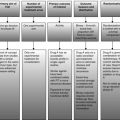
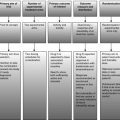
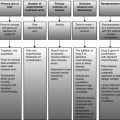
10 Rick Kaplan and Sarah Brown There is currently no standard treatment for patients with biochemical-failure-only prostate cancer following curative intent local therapy, the standard of care being watchful waiting. Clinicians are, however, increasingly treating such patients with androgen-deprivation therapies. These have an associated toxicity profile, and there is no conclusive prospective evidence of clinical benefit in this setting. There is, therefore, a need to investigate novel strategies in these patients; immune-modulator strategies may offer an alternative and less-toxic approach for patients with low tumour burden. Vaccine C is a targeted active immunotherapy, hypothesised to control tumour growth (indirectly reflected by prostate specific antigen (PSA) levels) thus potentially prolonging disease-free survival or, at a minimum, postponing exposure to long-term androgen deprivation. The development pathway of treatments in prostate cancer is important to consider in the design of clinical trials. In the setting of biochemical-failure-only prostate cancer, the time from entering clinical development to registration of successful treatments can be particularly long. Phase III trials in this setting may use endpoints such as time to failure of hormone therapy, or time to development of metastatic disease, as surrogates for overall survival. Even so, such events may be uncommon and are delayed often by many years; Pound et al. found that in some settings the median time to development of metastatic disease in untreated men with rising PSA was 8 years (Pound et al. 1999). Thus, consideration of the whole development pathway from phase I to registration is critical to ensure the design of the most efficient clinical trials. In this setting, and example, consideration is given to expanding the phase II trial immediately to phase III, should the vaccine be shown to be associated with an encouraging level of activity. Mechanism of action: Vaccine C is a targeted active immunotherapy. It induces MUC1 antigen expression to induce both innate and adaptive immunity. The vaccine is likely to be of interest for patients with low-volume tumours or patients with biochemical failure only, since although these patients have other treatment options available to them, they do not necessarily need them at this time. In addition, vaccines are generally expected to be more effective when tumour volume is minimal. Aim of treatment: The ultimate aim of treatment of patients with biochemical-failure-only disease is reversal of rising levels of PSAs, so as to delay onset of disease, delay of complications and improvement in metastatic disease-free survival. Single or combination therapy: Vaccine C is given as a single agent. Biomarkers: In this population of patients, the biomarker PSA is an appropriate intermediate outcome measure of disease activity (see Section 10.2.1 for further discussion). There are no biomarkers associated with potential for benefit from vaccine C for the purpose of population enrichment. The overall aims of the trial are to first identify an encouraging signal with vaccine C to warrant further study and then to select a single dosing schedule to investigate further in a randomised phase III trial. Proof of concept data are available for this vaccine in non-small cell lung cancer, but not in prostate cancer, although studies of similar agents have been performed. The trial aims to provide proof of concept data in this setting as well as sufficient evidence of activity to make a go/no-go decision as to whether or not to proceed to a phase III trial and to select the most active dose of vaccine C to compare against watchful waiting in the phase III trial. Two dosing schedules are to be considered: (1) weekly to week 7 then every 3 weeks to week 36 or progressive disease (PD); (2) every 3 weeks to week 36 or PD. The intention is not to show that one schedule is superior to the other, but to guide selection so that the selected schedule is sufficiently active to warrant investigation in a randomised controlled phase III trial. Safety and tolerability of the vaccine have been established in phase I trials, and there have been previous phase II studies of the vaccine in non-small cell lung cancer. Toxicity assessment is not thought appropriate as a primary outcome measure, since previous studies suggest this vaccine is less toxic than alternatives such as androgen-deprivation therapy; toxicity will therefore form a secondary endpoint, with the primary endpoint activity alone. Since the current standard of treatment for these patients is watchful waiting, and these patients are asymptomatic, a substantial improvement in activity is needed to warrant further investigation in a phase III trial. The primary outcome of interest is therefore activity alone. There are several outcome measures in trials of targeted therapies in prostate cancer (Stadler 2002). In this group of patients tumour burden is low and patients are asymptomatic. These patients have biochemical-failure-only disease that often predates clinical progression by a considerable time; therefore, endpoints such as time to development of metastatic disease are impractical due to the long follow-up times required. PSA is a commonly used short-term biomarker of outcome in prostate cancer and may be an appropriate primary outcome in this setting. Although PSA has not been shown to be a true surrogate for overall survival in the context of predicting treatment effects, a strong correlation between PSA and overall survival has been shown for the individual patient (Collette et al. 2005). A correlation was, however, also shown for PSA response. PSA response has previously been used in phase II trials, as an endpoint to determine when not to take a treatment forward for further investigation, since if a patient does not achieve a PSA response, he is unlikely to gain any further clinical benefit from treatment. Using PSA response as a robust outcome to reliably suggest further evaluation in phase III is warranted may, however, be questioned. The use of PSA response relies on pre-defined definitions which may not reflect the longitudinal trajectory of PSA levels over time. By assessing PSA as a continuous variable, and comparing changes over time, we may obtain more information on the effect of treatment than we would by using a simple binary outcome of PSA response. The use of PSA doubling time (PSA DT), derived from changes in PSA over time, is a commonly referenced outcome measure that is significantly associated with risk of prostate cancer-specific mortality (Freedland et al. 2005). PSA DT is defined as the natural log of 2 (0.693) divided by the estimate of the slope of the regression line of log(PSA) over time. PSA DT data are more widely published than change in PSA levels at a specific time point and provide an appropriate short-term measure of the activity of the vaccine that does not rely on pre-defined response definitions. We assess the pattern of change in PSA levels over time, with the expectation that the use of vaccine C will increase the doubling time. Thus the outcome under consideration is a continuous measure. Vaccine C is given as a single agent. The current standard of care in this setting is watchful waiting. With the additional complexities associated with giving patients a treatment, such as possible side effects, additional hospital attendances, additional clinical tests and so on, it is important that any treatment effect observed is substantial, to justify the associated ‘medicalisation’. The primary outcome measure is PSA DT. PSA levels are expected to rise in patients undergoing watchful waiting, and with the use of vaccine C the rate of rise in PSA is expected to be reduced or even reversed, and therefore PSA DT extended. Inclusion of a control arm is therefore essential to allow comparable data regarding the trajectory of PSA levels over time, which may be dependent upon baseline PSA levels and/or the variable natural history of prostate cancers. It is, however, unlikely that a treatment would be taken forward to phase III if it did not induce initial reductions in PSA levels; therefore, this may also be required by the study sponsor.
Selection by biomarker in prostate cancer
Stage 1 – Trial questions
Therapeutic considerations
Primary intention of trial
Number of experimental treatment arms
Primary outcome of interest
Stage 2 – Design components
Outcome measure and distribution
Randomisation
Related posts:

Stay updated, free articles. Join our Telegram channel


Full access? Get Clinical Tree


