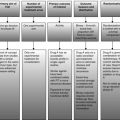
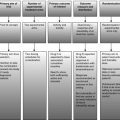
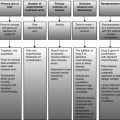
9 Ornella Belvedere and Sarah Brown Established treatment options for patients with advanced-stage non-small cell lung cancer (NSCLC) previously treated with chemotherapy include single-agent chemotherapy (i.e. docetaxel in unselected patients or pemetrexed in patients with nonsquamous histology) and oral tyrosine kinase inhibitors (i.e. erlotinib or gefitinib) (Azzoli et al. 2009). The use of doublet chemotherapy is currently being investigated using various chemotherapy combinations. Drug B is a cytotoxic with a favourable toxicity profile and evidence of activity in combination with docetaxel in the first-line setting for NSCLC patients. To date, drug B has not been investigated in second-line combination therapy. It is hypothesised that drug B, in combination with docetaxel, will improve the efficacy of docetaxel alone for patients with advanced-stage NSCLC. The trial is proposed to run as an academic study in a small number of centres with limited funding and relatively few patients; historical control data in this population are, however, available. A phase II trial of drug B in combination with docetaxel is proposed to determine whether a larger phase III trial should be planned and considered for funding by a much larger collabora- tive group. Mechanism of action: Drug B is a platinum-based cytotoxic agent expected to induce tumour response. It has a lack of cross-resistance with other platinum-based agents used in first-line NSCLC, based on pre-clinical data. Its favourable toxicity profile, along with evidence of activity in NSCLC in both pre-clinical and clinical studies (Monnet et al. 1998), makes drug B a good candidate to combine with docetaxel in NSCLC. Aim of treatment: The ultimate goal of second-line therapy for NSCLC is to prolong patients’ survival. Additionally, controlling disease-related symptoms and improving quality of life are important in this setting. An appropriate early indicator of treatment activity for combination chemotherapy which is expected to induce cell kill is achieving radiological tumour response. Single or combination therapy: Drug B is to be given in combination with docetaxel, an active drug, therefore any activity of the combination therapy would need to be shown as over and above that of docetaxel alone. Biomarkers: There are no validated biomarkers associated with drug B or with NSCLC, to allow patient enrichment or alternative assessment of therapeutic activity. Proof of concept data are available for this combination as first-line treatment for NSCLC. A proof of concept study for drug B in combination with docetaxel is, therefore, not deemed necessary. The aim of the current trial is to determine the activity of drug B in combination with docetaxel in patients with NSCLC previously treated with chemotherapy, to make a go/no-go decision as to whether or not to proceed to a phase III trial. There is only one experimental treatment under investigation therefore a selection trial is not required. Drug B has an acceptable toxicity profile in single-agent studies and has a mild toxicity profile in combination with docetaxel when assessed in chemo-naïve patients. Therefore, while toxicity will form a secondary endpoint of the phase II trial, the primary outcome of interest is activity alone. The primary aim of treatment in patients with advanced NSCLC previously treated with chemotherapy is ultimately to prolong overall survival. Early indicators of treatment activity are radiological tumour response, since the cytotoxic combination treatment under investigation is expected to induce tumour cell kill, and progression-free survival (PFS). The strength of the relationship between response rate, PFS and overall survival in NSCLC has been investigated in patients with advanced NSCLC (Mandrekar et al. 2010). PFS was shown to be more strongly correlated with overall survival than response; however, the analysis is based on a limited number of trials, some of which incorporate targeted therapies that may be expected to induce tumour stabilisation rather than response. Since the focus of the current study is on cytotoxic treatment, it was deemed appropriate to assess response rate as the primary outcome measure. Thus, a binary outcome measure of the proportion of patients achieving at least a confirmed partial response will be used. Drug B is to be given in combination with docetaxel. It is important to be confident that any apparent extra activity with the combination can reasonably be attributed to the addition of drug B. Randomisation should, therefore, be incorporated to provide robust and reliable results in this particular setting. Incorporating formal statistical comparison between the arms provides the most robust approach; however, as acknowledged in Chapter 2, this requires a major increase in sample size compared to single-arm phase II trials, unless a large treatment effect is targeted. Here, with the trial proposed to run in a small number of centres and with relatively few patients, formally powered comparison with single agent docetaxel may be prohibitive in terms of sample size. There is a substantial body of historical data available on the activity of docetaxel alone in second-line NSCLC, which can reliably inform the expected response rate (Fossella et al. 2000; Hanna et al. 2004; Shepherd et al. 2000). It may, however, be plausible to incorporate randomisation but with no formally powered comparison in this trial. As discussed in Chapter 2, without formal comparison between the control and experimental arm, the sample size increase is more modest than when a formal comparison is intended. In its simplest form, the sample size may just be doubled, to allocate patients in a 1:1 ratio to control and experimental treatments. Here the control arm acts as a calibration group, and the inclusion of randomisation reduces patient selection bias, thus providing greater confidence interpreting results of the experimental therapy. It is important that multiple scenarios be considered when choosing the statistical design, to assess how robust each of them is, if outcomes in either the experimental or control arm are not as expected. For example, if activity in the control arm is uncertain, how well do the different trial designs cope with an under- or over-estimation of this activity? Rejected designs: Candidate designs: One-stage and three-outcome designs were considered as potential designs for the trial.
Combination chemotherapy in second-line treatment of non-small cell lung cancer
Stage 1 – Trial questions
Therapeutic considerations
Primary intention of trial
Number of experimental treatment arms
Primary outcome of interest
Stage 2 – Design components
Outcome measure and distribution
Randomisation
Design category
Related posts:


Stay updated, free articles. Join our Telegram channel

Full access? Get Clinical Tree


