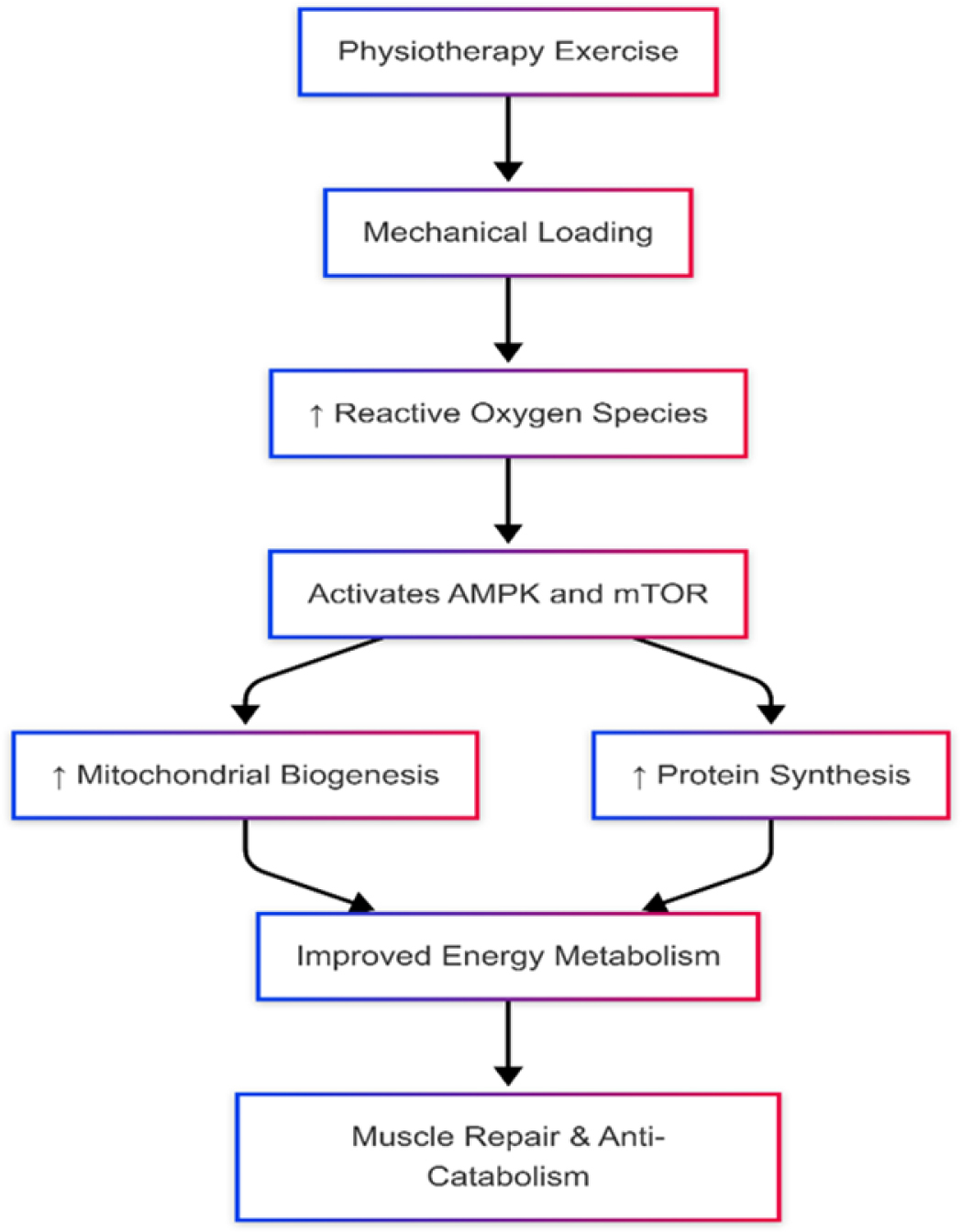
Cancer rehabilitation is a multidimensional phenomenon that responds to the physical, psychological and social problems of survivors. Physiotherapy is integral to this continuum in optimizing functional recovery, metabolism, fatigue and quality of life. As the global cancer burden continues to increase, particularly in low- and middle-income countries, timely and individualized physiotherapy interventions are becoming more valuable. Exercise-based rehabilitation can include aerobic, resistance and mobility training obtained clinically and has certain biochemical and clinical benefits on improved muscle strength, cardiopulmonary function and systemic inflammation. In addition, pain control methods such as manual therapy, transcutaneous electrical nerve stimulation (TENS) and breathing exercises are effective, non-pharmacological solutions. Physiotherapy also addresses the mental and psychosocial aspects of patients through group activities and psychological strategies to gain emotional health and social reintegration. Despite its demonstrated effectiveness, utilization is suboptimal because of barriers such as fatigue, pain and inadequate awareness. This chapter supports the early incorporation of physiotherapy in the oncological setting, systemic integration to mitigate inequalities in access and delivery of services, and needs-based, patient-driven approaches that can instigate improved outcomes in cancer survivorship and recovery outcomes across the cancer trajectory. Recovery from cancer is a complex process that involves physical, psychological and social aspects. Physiotherapy is crucial in restoring function, reducing pain and addressing frequent post-treatment conditions such as fatigue and musculoskeletal dysfunction. The global cancer burden continues to be a significant public health concern, with substantial regional variation in incidence and survival outcomes (Bray et al. 2012; Kamangar et al. 2023). Although detection and survival rates are rising in high-income regions, low- and middle-income countries are experiencing increasing prevalence of cancer as access to care is limited (Kamangar et al. 2023). Physical activity-based rehabilitation modeling is at the core of cancer recovery; it helps restore muscle strength and mobility, cardiopulmonary function, as well as preventing fatigue and pain. High-intensity aerobic and resistance training have shown considerable exposure in post-treatment outcomes, one notable example being a recovery from lung cancer (Minh et al. 2023; Del Bianco et al. 2024). Home-based programs provide more support for survivors, offer flexibility and prevent deconditioning. Prehabilitation, especially before surgery, improves physical capacity and decreases postoperative complications (Chen et al. 2022). Physiotherapy encompasses more than exercise, with pain management techniques including breathing exercises (BEs) and manual therapy. These strategies are aimed at combating musculoskeletal pain and fatigue, thereby improving functional independence (Moriyama et al. 2023; Ngo‐Huang et al. 2023). Regular physical activity counteracts fatigue, a prevalent and debilitating problem, and alleviates cytokine-induced myopathy; it enhances endurance (Elshahat et al. 2021). In addition to physical rehabilitation, psychological support such as cognitive-behavioral therapy and motivational techniques also makes an important contribution in significantly enhancing quality of life (QoL) (Torre‐Luque et al. 2016). Emotional support for the patients has also been shown to improve compliance with rehabilitation protocols (Houn et al. 2020) Furthermore, novel technologies, including digital therapeutics and virtual rehabilitation, are enabling a new spectrum of care that is context-sensitive and in real time (Phan et al. 2023). Despite persistent hurdles of patient engagement and financial constraints, these innovations hold significant promise for enhancing rehabilitation success (Brepohl and Leite 2022; Sánchez-Gil et al. 2025). Although physiotherapy has a well-established positive effect, uptake is low due to barriers including pain, fatigue and a lack of awareness (Naz et al. 2023). It is important to address these challenges, as the combination of improved education and better integration of these two services is fundamental to achieving an optimal recovery (Nareeba et al. 2023). Patient-reported outcome measures (PROMs) drive quality improvement initiatives to generate a more patient-centered approach to rehabilitation (Queen 2016). Inevitably, physiotherapy exercise interventions in cancer care have demonstrated beneficial biochemical changes, and these changes also translate into improved clinical outcomes and QoL. Such an exercise transcends mechanical movement; it initiates cellular adaptations that oppose cancer-induced metabolic derangement. Generally, mechanical loading induced by the act of exercising leads to skeletal muscle excitation, transiently producing low levels of reactive oxygen species (ROS), inducing key intracellular signaling pathways including AMP-activated protein kinase (AMPK) and the mammalian target of rapamycin (mTOR). This contributes to increased mitochondrial biogenesis, protein synthesis and energy metabolism, fighting muscle loss and the systemic catabolic state often present in cancer patients (Figure 16.1) (Thomas et al. 2016). Figure 16.1. Role of exercise in cancer patients Exercise also suppresses pro-inflammatory cytokines and increases anti-inflammatory mediators, enhancing tissue repair, immune regulation and the tumor microenvironment. It impacts concentrations of important biochemical markers such as prostaglandins, somatomedins (insulin-like growth factors) and fibronectins related to tissue remodeling and immune modulation (Thomas et al. 2016; Nadler et al. 2019). Physiotherapy clinically enhances musculoskeletal and pulmonary function. For example, in a postoperative case of gingivobuccal sulcus carcinoma that developed empyema, further chest physiotherapy led to better pulmonary parameters by improving ventilation and oxygenation processes closely related to cellular metabolism and energy efficiency (Qureshi et al. 2024). From a biochemical perspective, such changes in skeletal muscle due to exercise have broader implications on systemic physiology, as previously detailed, and meta-analysis data further show that exercise interventions in patients with advanced solid tumors significantly reduce cancer-related fatigue (CRF) and improve physical function, likely a consequence of the mentioned biochemical adaptations (Nadler et al. 2019). Exercise and physiotherapy are vital in cancer recovery, providing solutions to physical, psychological and emotional needs. Physiotherapy, through exercise-related interventions complemented by pain management and psychological support, enhances functional independence and QoL, and thus is a crucial part of a holistic approach to cancer care. Physiotherapy is an important component of cancer care; there are several ways in which physiotherapy can be employed for the benefit of patients. It facilitates cancer-induced pain through hands-on therapy and exercise manipulation (Siqueira and de Siqueira 2023), restores strength and mobility after operations such as mastectomy or tumor excision (Kumari et al. 2024), and reduces fatigue through aerobic and resistance training (Lungu and Chiluba 2021). Physiotherapy also plays a key role in lymphedema management, where a combination of treatments (Kumari et al. 2024) can reduce risk and improve the overall QoL with pain and function, sleep and emotional reactions (Kashanova et al. 2024). As part of the palliative care process, physiotherapy and mobility reduce discomfort for end-stage patients (Siqueira and de Siqueira 2023) while providing psychological benefits by reducing depression, anxiety and increasing self-esteem (Chetan et al. 2024). Finally, it offers essential respiratory assistance to lung cancer and thoracic surgery patients, aiding in respiration and oxygenation (Kashanova et al. 2024). Physiotherapy management in cancer care follows the whole continuum from prehabilitation before therapy, rehabilitation following treatment and promoting mobility, strength and symptom management. Such strategies consist of functional recovery-focused exercises, psychosocial interventions such as yoga for emotional welfare and palliative care methods for better comfort. It is an ongoing assessment to ensure care is always personalized and adaptive to all stages of the cancer journey. The physiotherapeutic approach toward the cancer patient described in Tables 16.1 and 16.2 summarizes the clinical guidelines used in providing physiotherapy care across the cancer pathway, to ensure standardized evidence-based practice. Table 16.1. Physiotherapy application in cancer Table 16.2. Various guidelines for physiotherapy We reviewed studies of physiotherapy interventions and outcomes (i.e. physical activity, QoL, treatment-related outcomes (e.g. fatigue, weakness)) in cancer. Due to painful symptoms, emphasized muscle weakness at different cancer stages, and functional dependence in complicated cases, exercise therapy should be complemented with mobility training in cancer rehabilitation, focusing on improving gait and balance and restoring the functional independence of the patient. It also enhances the physical fitness, decreases deconditioning and improves mobility and QoL measures. Physical activity structured regimens enhance physical fitness and decrease deconditioning. Muscle weakness is a common side effect of pediatric cancer treatments such as chemotherapy and corticosteroids; however, focused exercise therapy significantly reduces lower extremity weakness, gait and balance problems, emphasizing the degree of early intervention (Wacker et al. 2017). For adults, adherence to home-based exercise programs during treatment improves physical function, aerobic capacity and muscle strength, ultimately increasing treatment tolerance and decreasing morbidity, as recommended in gold-standard recommendations within the scoping review of cancer survivors (Ngo‐Huang et al. 2023). Aerobic conditioning, including pre- and post-surgery exercise training, would particularly be of benefit for patients with lung cancer, which, among other benefits, improves cardiopulmonary fitness, promotes faster recovery post-surgery and reduces complications, further demonstrating the clinical effectiveness of mobility training during perioperative care (Ni et al. 2016). Specific regimens have been shown to improve strength, coordination and mobility that, if implemented and encouraged early, will help survivors promote independence in the long term (Blasio et al. 2016). Together, these findings emphasize the widespread benefits of exercise therapy and mobility training, facilitating the personalization of evidence-based interventions to optimize recovery for a diverse array of patient populations and treatment stages. Physiotherapy pain management interventions are an integral musculoskeletal aspect of cancer recovery, providing a non-pharmacological framework encompassing both the sensory and affective components of pain while also laying the groundwork for functional independence and improvements in QoL. Manual therapies, exercise regimens and electrotherapeutic modalities are among these interventions, and they should be tailored to each patient’s needs.
16
Role of Physiotherapy in Cancer Recovery: A Review and Recommendation
16.1. Introduction
16.2. Literature review
16.2.1. Recent studies on physiotherapy and cancer recovery
No.
Physiotherapy application
Use/importance
1
Pain management
Alleviates cancer-related pain through manual therapy and exercise-based modalities (Siqueira and de Siqueira 2023)
2
Post-surgical rehabilitation
Restores mobility, strength and independence after surgeries such as mastectomy or tumor removal (Kumari et al. 2024)
3
Fatigue reduction
Reduces cancer-related fatigue via aerobic and resistance training (Lungu and Chiluba 2021)
4
Lymphedema management
Prevents and reduces swelling with Complex Decongestive Therapy and mobilization
5
Improved quality of life (QoL)
Enhances emotional well-being, sleep and functional ability
6
Palliative care support
Promotes dignity and mobility and reduces discomfort in end-stage patients (Siqueira and de Siqueira 2023)
7
Psychological benefits
Decreases depression and anxiety and boosts self-esteem (Chetan et al. 2024)
8
Respiratory support
Vital for lung cancer and thoracic surgery patients, improves breathing and oxygenation (Kashanova et al. 2024)
No.
Guideline source
Title
1
American Physical Therapy Association (APTA) (Segal et al. 2017)
Exercise for People With Cancer: Clinical Practice Guideline
2
American College of Sports Medicine (ACSM) (Campbell et al. 2019)
Exercise Guidelines for Cancer Survivors
3
Chartered Society of Physiotherapy (UK)
So Your Patient Has Cancer – A Guide for Physiotherapists not Specialising in Cancer
4
Australian Physiotherapy Association (APA) (APA 2025)
Physiotherapy and Exercise Rehabilitation in Cancer Care
7
Clinical Oncology Society of Australia (COSA) (Cormie et al. 2018)
Position Statement on Exercise in Cancer Care
16.3. Methods
16.4. Result
16.4.1. Exercise and mobility training
16.4.2. Pain management techniques
Related posts:
 The Role of Artificial Intelligence in Personalized Physiotherapy and Cancer Treatment
Model Validation Techniques for AI in Cancer Research Based on Physiotherapy and Oncology
Machine Learning in Oncology and Physiotherapy: A New Era of Precision Medicine
Automating Cancer Detection and Rehabilitation: The AI Revolution
AI and Wearable Technology in Physiotherapy for Oncology Patients
Smart Robotics in Physiotherapy and Oncology: Redefining Patient Outcomes
The Role of Artificial Intelligence in Personalized Physiotherapy and Cancer Treatment
Model Validation Techniques for AI in Cancer Research Based on Physiotherapy and Oncology
Machine Learning in Oncology and Physiotherapy: A New Era of Precision Medicine
Automating Cancer Detection and Rehabilitation: The AI Revolution
AI and Wearable Technology in Physiotherapy for Oncology Patients
Smart Robotics in Physiotherapy and Oncology: Redefining Patient Outcomes

Stay updated, free articles. Join our Telegram channel

Full access? Get Clinical Tree


