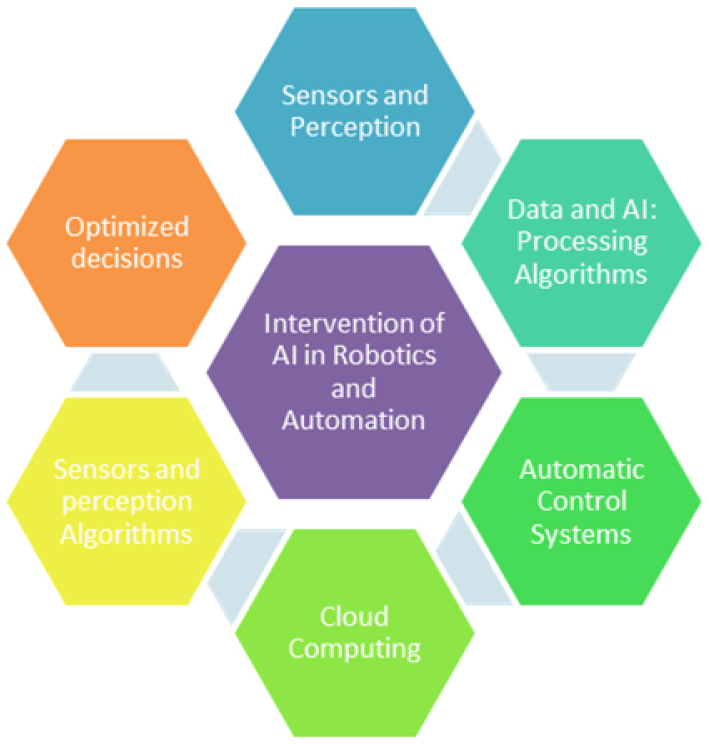
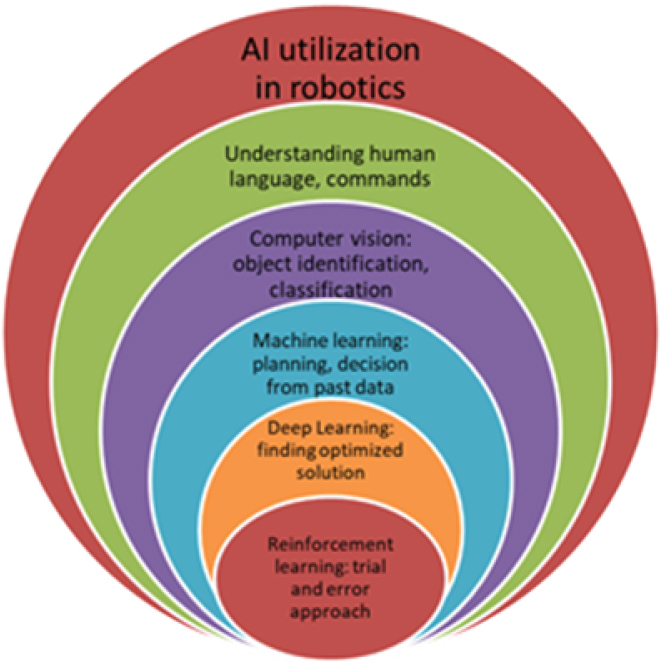
Artificial intelligence (AI) is proving to be a revolutionary technology in almost every field of life including healthcare, sports, the fashion industry, military, etc. The intervention of AI in day-to-day life improves the standard of living and transforms industries into automation, making life easy and luxurious. AI systems and subset technologies such as machine learning (ML), artificial neural networks and deep learning (DL) empower machines to solve complex problems and make optimized decisions from a number of options. While AI improves the standard of living, it also impacts on privacy and data security. Therefore, AI must be handled and implemented responsibly and thus some prospects and challenges accompanying AI must be considered in order to shape a better future. The rapid advancement of the digital age has led to widespread automation, replacing human labor faster than expected. Some scientists believe this trend will significantly impact human civilization, ultimately leading to extensive job automation. Ahmed (2019) argues that AI and automation can weaken even well-established businesses, and they emphasize that labor unions have a moral duty to protect both workers’ rights and broader ethical standards. The Covid-19 pandemic further disrupted businesses, causing supply-chain issues and reduced productivity (Allam et al. 2019; Awotunde et al. 2021). It also accelerated the shift towards automation and remote work as companies sought alternatives to traditional labor. Studies indicate that these changes had significant negative effects globally. Therefore, it is crucial to examine how technological advancements have influenced economic growth and why recent innovations are particularly transformative (Bragazzi et al. 2020). The AI literature provides an extensive study of three key issues such as: Regarding the current study, the second issue is pertinent (Bharadiya et al. 2023). Understanding the underlying reasons behind the growing apprehension about automation is necessary for a thorough examination of how technology developments affect the labor market (Benke et al. 2018). The causes of this have been extensively studied by researchers. Artificial intelligence (AI) has emerged as a major technical development with considerable potential to completely transform the area of robotics. In addition to technological developments, ethical issues surrounding AI’s application in robots have gained a lot of attention (Deshpande et al. 2018; Chopra et al. 2023). Safety, accountability, openness and prejudice in decision-making are examples of ethical dilemmas that must be discussed to guarantee the moral and responsible use of AI-powered robots across a range of fields. The basic boundaries of AI algorithms in managing some unpredictable and active environments, problems with safety, toughness and interpretability still exist despite the rapid advancements in AI for robotics (Dhana et al. 2022). It is important to carefully consider the societal and economic effects of the widespread use of AI in robots, including the possible effects on employment as well as social standards as revealed in Figure 16.1. The integration of AI and IoMT in customer health apps has the potential to transform healthcare. It empowers people by improving the care provided by healthcare authorities (Dong et al. 2020; Grischke et al. 2020). These apps provide more personalized feedback, with guidance and support for maintaining good health. Figure 16.1. Intervention of AI and robotics As an example, there is increased accuracy in the detection of cancer and early-stage detection with the use of AI. Reviewing and translating mammograms can now be done up to 30 times faster with precision up to 99%. This will not only speed up diagnosis but also lead to needless biopsies being dropped (Gaur et al. 2021). AI supports healthcares to take a more comprehensive approach to disease management, helping them coordinate care plans and achieve better management for fulfilling long-term treatment plans (Gao et al. 2021). Figure 16.2. Robotics, automation and AI In addition to AI, robotics are used in the field of medicine, and the combination of robotics in medical situations has the potential to improve the efficiency of patient outcomes. This makes robotics a treasured asset in modern healthcare (Jin et al. 2020; Haick et al. 2021). The incorporation of AI with machine learning (ML) and robotics in agriculture creates powerful tools and insights to boost the productivity of farms (Jin et al. 2020). The use of robotics in farming automates labor thorough tasks such as irrigation with dispersal of seeds, pest control and harvesting gives farmers’ more time to concentrate on more fruitful activities. The mixture of AI and robotics in agriculture brings about the power to drive positive change, leading to the complete development of the global agricultural landscape (Khogali et al. 2023; Kuru et al. 2024). In storage and warehouse settings, the use of AI has significantly improved safety by helping machines understand their surroundings better, especially with the help of thermal and haptic sensors. These sensors act as the “eyes and touch” for robots, guiding their decisions and allowing them to operate smoothly and safely. Automated guided vehicles (AGVs) and carts (AGCs) are commonly used to move stock around, enabling 24/7 operations while keeping costs consistent. Automation robotics plays a dynamic part in the automotive industry. The rewards of robotics in motorcars are diverse including true vision for positioning and situating required particulars, enabling tasks such as fitting door buffers, panels and other factors (Lee et al. 2019; Lutz et al. 2019). AI supported by all robotic and automation units can be seen in Figure 16.2. Some algorithms used for robotics are: Each of the several algorithms used in AI for robotics has advantages and disadvantages of its own. SLAM is essential for mapping and navigation, supervised learning is useful for tasks involving labeled data, DL is strong for perception and control, reinforcement learning is excellent for adaptive decision-making and computer vision offers visual perception capabilities (Miller et al. 2020). Task requirements such as data availability with computational resources and desired degree of robot autonomy all influence which method is best. Chopra et al. (2023) give an overview on the exciting connection of AI and robotics, reshaping both economic and organizational dynamics. Together, AI and robotics have unlocked many new opportunities in areas of human–robot interaction, social robotics and perceptive robotics. Recent highlights of AI in robotics are innovative research trends with some technical tactics, and real-world applications which also raises some ethical, social and economic questions in regard to this rapidly growing field. AI in robotics sheds light on the prospects of basic tasks connected with this technology. As employers adopt automation technologies developed by AI, workers may fear job displacement, creating challenges for both parties (Naha et al. 2022). The study “Automation Fears: Drivers and Solutions” surveyed 502 people in Bulgaria, revealing that individuals prioritize their own solutions over profitable or social ones due to rising automation concerns. This basic survey found that fears of job automation are influenced by personal beliefs and demographics (Nadikattu 2021). Key factors driving these fears include peer pressure, the likelihood of a job being automated, concerns about technology dehumanizing work and an individual’s self-perception of professionalism. The main objective of this chapter is to explore the long-term societal impacts of current progress in AI technology and computerization. The findings are shaped by various subtopics addressed throughout the research (Nam et al. 2021). Each section begins with an explanation of the chapter’s structure. The study expresses common features and establishes a theoretical framework. It also examines the drivers of automation and AI, as well as how society perceives and accepts these technologies in general (Leary et al. 2013). Hisham et al. (2023) explored social-impact assessment theory, as described by Dietz et al. (2024). It involves identifying, evaluating and measuring how an event affects society. Similarly, the societal effects of AI should be carefully analyzed, just as the impact of scientific research is assessed. To track AI’s influence amid rapid technological growth, a hybrid approach can be used. This approach combines narrative evaluation, which identifies relevant studies on a specific issue, and thematic pattern analysis, which detects recurring themes, trends and concepts within texts such as transcripts. The “impact of AI on jobs” suggests that AI in the workplace can either create and enhance new job opportunities or lead to significant job losses. The “impact of AI on workers’ well-being” suggests that while automation and AI may increase productivity and wages for some employees, they can also negatively affect job security and overall well-being. The “impact of AI on organizational dehumanization” describes employees’ perceptions of being mistreated by their organizations, feeling undervalued and being treated more such as machines than humans due to increased AI integration. “Fears from the job automation” refers to the concern that widespread automation may lead individuals to worry about job security due to the increasing reliance on automated systems. “AV worries” relates to concerns in autonomous vehicle (AV) engineering, where safety validation goes beyond traditional methods. Ensuring the functional performance of these new vehicle types presents a unique challenge in guaranteeing their safety (Obschonka et al. 2020). The link between AI advancements and possible job losses underscores the significant risks associated with the common adoption of AI, despite its many benefits. This research aims to conduct a detailed analysis of how automation and AI influence various long-term societal factors. The primary objective is to determine the global impact of automation and AI on businesses and human civilization, ultimately assessing whether these technologies benefit or harm society (Panesar et al. 2019). Because of the rapidly changing global shifts in AI technology and innovation, the current study presents the following core questions (Ramasamy et al. 2022): AI powered literature reviews can provide support for issues that require complex social, business and ethical information. Social science methods are required for technological societal and ethical suggestions because they deliver more flexibility when considering composite data. There are some theories related to AI’s societal and ethical impacts. AI presents risks such as job displacement, increased poverty, instability, unemployment and serious privacy concerns. To harness its benefits safely, regulations and stronger security measures are essential (Raj et al. 2019). While technology can improve various aspects of life such as health monitoring, social connections, information access, communication and convenience, it also reduces privacy and introduces new challenges. Despite enabling instant communication, technology can contribute to loneliness and expose individuals to new forms of manipulation and intimidation. According to basic research, AI is constructed for adopting social environments. The AI system can be trained to carry out social behaviors and launch social networks (Shi et al. 2020). In order to assess social impact theories, it is important to ascertain who is most likely to be impacted, figure out how to identify those who will be impacted, assess potential social ramifications, put management strategies in place to minimize harmful effects and maximize benefits, and enable regular monitoring and the pursuit of goals.
16
Key Technologies of Artificial Intelligence: Robotics, Wearables and Big Data
16.1. Introduction
16.2. Intervention of artificial intelligence (AI) in robotics and automation
Basic applications – healthcare
Definitions that have been adopted
Basic research problems
Societal impact theories
Related posts:
 AI-driven Imaging in Oncology and Physiotherapy: A Game-changer in Diagnostics
AI-enhanced Virtual Rehabilitation: The Future of Cancer Recovery
Integrating AI with Physiotherapy to Improve Quality of Life for Cancer Patients
Personalized AI-based Exercise Therapy for Oncology and Physiotherapy Patients
AI-driven Motion Analysis for Physiotherapy in Cancer Survivors
AI-driven Imaging in Oncology and Physiotherapy: A Game-changer in Diagnostics
AI-enhanced Virtual Rehabilitation: The Future of Cancer Recovery
Integrating AI with Physiotherapy to Improve Quality of Life for Cancer Patients
Personalized AI-based Exercise Therapy for Oncology and Physiotherapy Patients
AI-driven Motion Analysis for Physiotherapy in Cancer Survivors
 AI-driven Innovations in Biomaterial-based Physiotherapy and Oncology: Personalizing Patient Care Through Intelligent Monitoring and Predictive Rehabilitation

Stay updated, free articles. Join our Telegram channel

Full access? Get Clinical Tree


